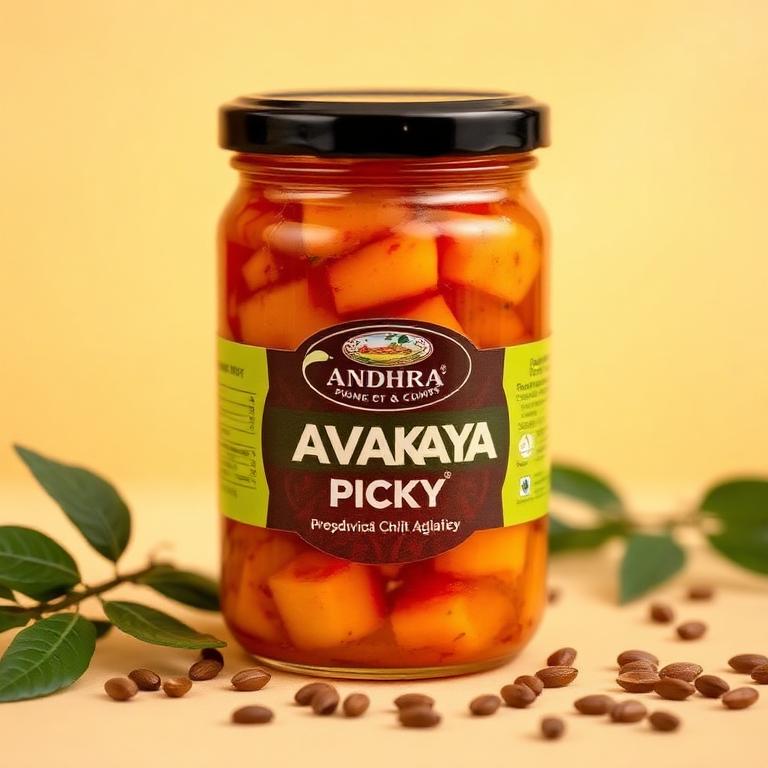
The Pride of Andhra Cuisine
Andhra Avakaya is not just a pickle; it is a cultural emotion. Originating from the hot plains of Andhra Pradesh, it is a fiery, spicy, and tangy pickle made with raw mangoes, freshly ground mustard seeds (aava), red chili powder, and cold-pressed sesame oil. It is globally famous for its robust flavor profile and long preservation timeline.
Three Pillars of Perfect Avakaya
A perfect jar of Avakaya relies on three traditional factors:
- Mango Selection: Only sour, firm raw mangoes with a strong, fibrous inner shell (tenka) are used. The Collector or Kothapalli Kobbari varieties from the Godavari delta are preferred. The hard shell preserves the shape and prevents the pieces from turning mushy.
- Cold-Pressed Sesame Oil: Authentic Avakaya must use pure Pappu Nune (cold-pressed sesame oil). Sesame oil acts as a natural preservative and develops a sweet, nutty undertone that balances the heat of the red chilies.
- Mustard Spiciness: The signature kick comes from finely ground Aavapindi (mustard powder), which matures over days to create a sharp, pungent kick that is unique to Andhra pickles.
The Stoneware Curing Process
Once mixed, the pickle is transferred to traditional ceramic jars called Stoneware Bharanis.
- Thermal Insulation: Ceramics protect the pickle from temperature fluctuations, ensuring uniform curing.
- Oxygen Control: The jar is tied tightly with a clean white muslin cloth, allowing the pickle to breathe while blocking moisture and dust.
- Maturation: The pickle is left undisturbed for three days, after which it is mixed with a dry ladle and is ready to serve.
